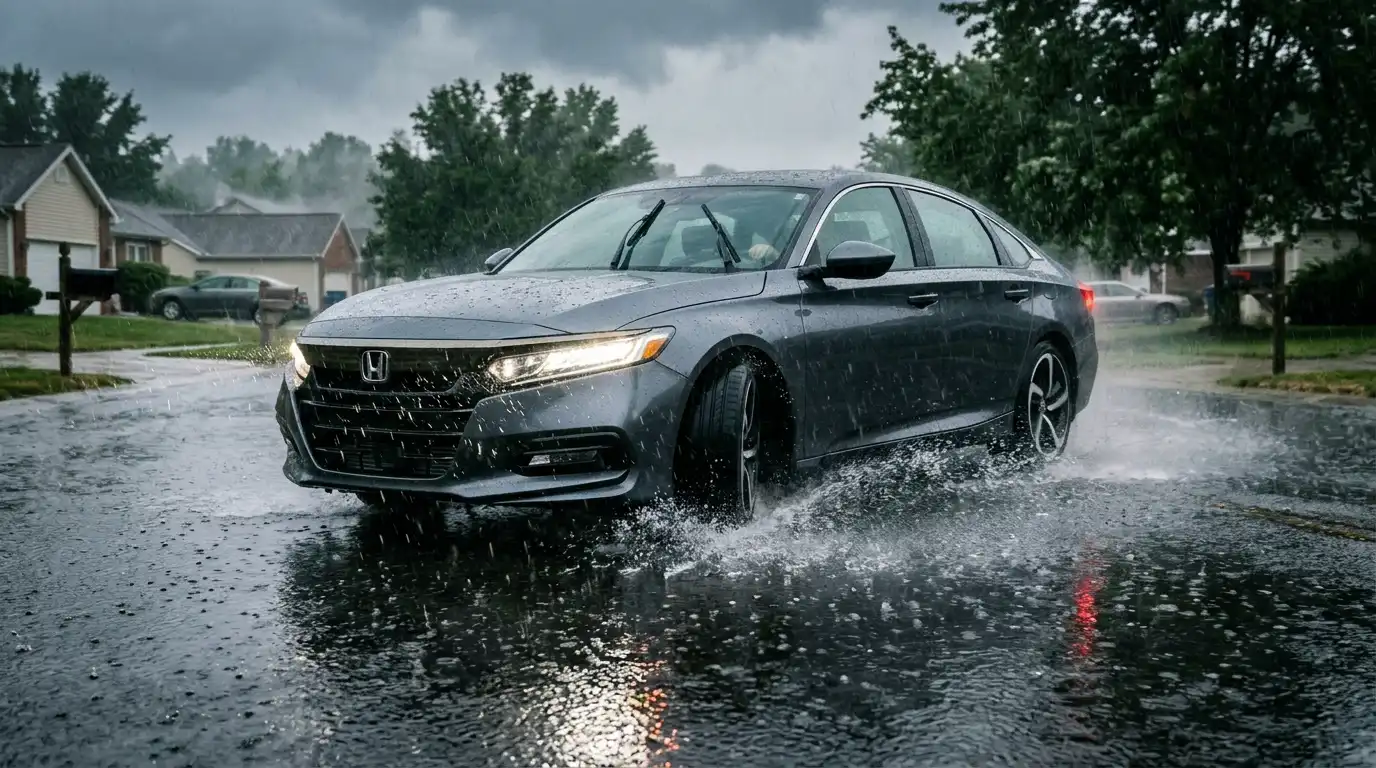
Heavy rain can turn an ordinary drive into a dangerous situation within minutes. Roads that are normally easy to navigate may become slippery, visibility can deteriorate rapidly, and standing water can hide potholes, damaged pavement, and other hazards. When intense rainfall overwhelms drainage systems, familiar streets and highways can also flood with little warning.
For drivers across the United States, understanding safe driving in heavy rain is an essential part of responsible vehicle operation. Rain-related hazards can occur during summer thunderstorms, tropical storms, hurricanes, winter weather systems, and unexpected downpours. Even drivers who have years of experience behind the wheel can face serious challenges when tires lose traction or floodwater begins moving across a roadway.
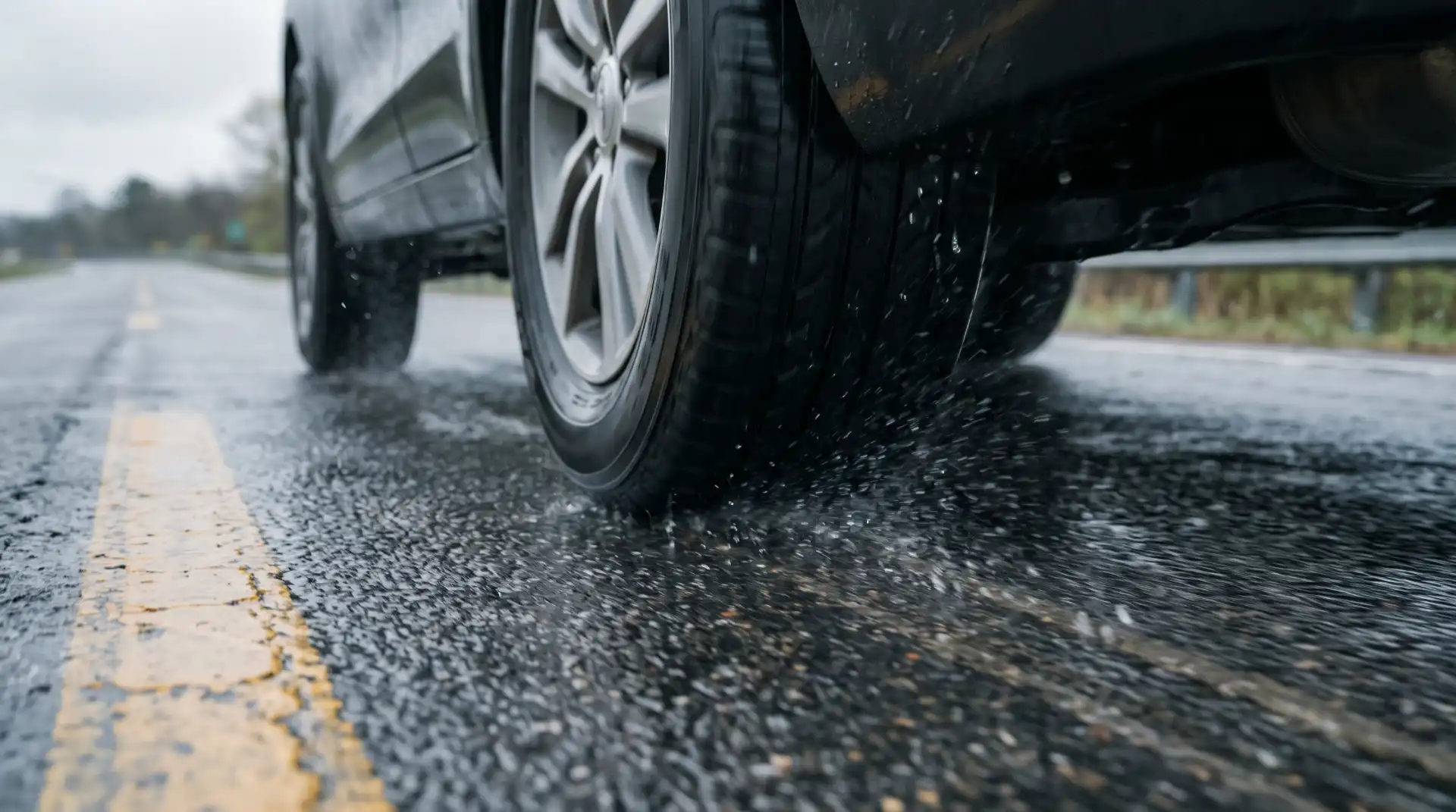
One of the most important risks is hydroplaning, which happens when a vehicle’s tires lose sufficient contact with the road because water builds up between the tires and the pavement. Another major danger is flash flooding, where rapidly rising water can make roads impassable, damage pavement, and sweep vehicles away.
The good news is that preparation and appropriate driving decisions can reduce many of these risks. Checking tires, slowing down, increasing following distance, using headlights correctly, monitoring weather alerts, and choosing not to cross flooded roads can help protect drivers and passengers.
This guide explains how to drive safely in heavy rain, prevent hydroplaning, recognize flash-flood dangers, respond to emergencies, and prepare your vehicle for wet-weather travel. Whether you commute daily, drive long distances, transport children, or travel through areas prone to flooding, these practical tips can help you make safer decisions on American roads.
Why Heavy Rain Makes Driving More Dangerous
Rain affects several important aspects of vehicle control at the same time. It reduces tire traction, interferes with visibility, increases stopping distances, and makes it harder to identify hazards ahead. When water accumulates faster than a road can drain, conditions can become significantly more dangerous.
Reduced Tire Traction on Wet Pavement
Tires depend on contact with the road surface to accelerate, steer, and brake. On dry pavement, the rubber can generally maintain reliable traction when the tires are properly inflated and in good condition. Rain changes that environment by introducing a layer of water between the tire and the road.
Light rain can create slippery conditions, especially during the early stages of a storm. Water mixes with oil residue, dust, rubber particles, and other substances that accumulate on the pavement. This mixture can make the surface unusually slick before heavier rainfall washes some of the residue away.
As rainfall continues, water may collect in depressions, wheel ruts, poorly drained intersections, and low areas of highways. When tires encounter these areas, their ability to grip the road can decrease.
Drivers should not assume that a familiar route is safe simply because they have traveled it many times. A road that was dry earlier in the day may have developed standing water, debris, or localized flooding by the time they return.
 Reduced Visibility and Longer Stopping Distances
Heavy rain makes it harder to see traffic signals, lane markings, pedestrians, cyclists, road signs, and vehicles ahead. Water spray from trucks and other vehicles can create a temporary wall of mist, particularly on busy highways.
Rain also affects the driver’s ability to judge distance and speed. A vehicle that appears to be several car lengths away may be closer than expected, while faded lane markings can make lane positioning difficult.
At the same time, wet pavement can increase the distance required to stop. If a driver is following too closely, even a modest reduction in the leading vehicle’s speed can create a collision risk.
For these reasons, safe driving in heavy rain requires more than simply switching on the windshield wipers. Drivers must adjust their speed, leave additional space, remain alert, and be prepared to delay their journey if conditions become unsafe.
Flash Floods Can Develop Quickly
Flash flooding occurs when water rises rapidly after intense rainfall or other events that produce sudden runoff. It can happen in urban neighborhoods, rural areas, mountain valleys, desert washes, and locations far from major rivers.
In cities, overwhelmed storm drains can cause intersections, parking lots, underpasses, and low sections of roads to fill with water. In rural and mountainous areas, rainfall may flow downhill into normally dry channels or across roads that appear safe under ordinary conditions.
Some drivers mistakenly believe flooding is only a concern when they can see a river overflowing its banks. In reality, a flash flood can develop in a location where the rain has already stopped because runoff from surrounding areas continues moving toward lower ground.
Never assume that a road is safe because the water looks shallow or because other vehicles have crossed it. The surface beneath the water may be damaged, and the current may be stronger than it appears.
What Is Hydroplaning, and Why Does It Happen?
Hydroplaning, also called aquaplaning, occurs when a tire rides on a layer of water instead of maintaining sufficient contact with the pavement. When this happens, the driver may temporarily lose some or most of the ability to steer, brake, or control the vehicle.
Hydroplaning can affect passenger cars, SUVs, pickup trucks, and other vehicles. Its likelihood depends on several factors, including vehicle speed, water depth, tire tread condition, tire pressure, road surface, and the amount of water the tires must displace.
The Role of Speed
Speed is one of the most important factors in hydroplaning risk. As a vehicle travels faster, its tires have less time to channel water away from the contact area. If the tires cannot clear the water quickly enough, traction can deteriorate.
There is no single speed at which every vehicle will begin to hydroplane. A car with worn tires on a water-covered road may lose traction at a different speed from a vehicle with good tires traveling over a relatively well-drained surface.
This is why posted speed limits should never be treated as guaranteed safe speeds during storms. A highway speed limit may be appropriate in clear weather but entirely unsuitable when rain is falling heavily.
Reduce speed before reaching standing water rather than waiting until the tires begin to lose grip. Avoid sudden acceleration, sharp steering inputs, and aggressive braking on wet pavement.
Tire Tread and Inflation Matter
Tire tread contains grooves designed to move water away from the tire’s contact patch. As tread wears down, the tire generally becomes less capable of evacuating water, increasing the risk of losing traction in wet conditions.
Proper inflation is also important. Underinflated or overinflated tires may not perform as intended, and incorrect pressure can affect handling, braking, and tread wear.
Check tire pressure when the tires are cold and follow the vehicle manufacturer’s recommended pressure, usually listed on the driver’s door-jamb label or in the owner’s manual. The maximum pressure printed on a tire’s sidewall is not necessarily the correct operating pressure for your vehicle.
Inspect tread regularly for excessive wear, uneven patterns, cracks, bulges, and embedded objects. If you are uncertain about a tire’s condition, have it inspected by a qualified tire professional before driving in severe weather.
Remember that all-wheel drive and four-wheel drive do not eliminate hydroplaning risk. These systems can help distribute engine power, but they cannot guarantee traction when tires lose contact with the pavement.
How to Recognize Hydroplaning
Hydroplaning may begin without a dramatic warning. Drivers should recognize possible signs before the situation develops into a more serious loss of control.
The steering wheel may suddenly feel unusually light, and the vehicle may seem to drift or respond poorly when the driver attempts to steer. Engine speed may rise unexpectedly if the driven tires lose traction. The vehicle may also continue moving in a direction different from the one the driver intends.
If the car feels as though it is floating, sliding, or failing to respond normally, treat the situation as a possible loss of traction. Do not attempt to force the vehicle back into position with abrupt steering or hard braking.
How to Prevent Hydroplaning in Heavy Rain
Hydroplaning prevention begins before the storm. Vehicle maintenance, sensible route planning, and careful driving all contribute to safer travel.
Slow Down Before Conditions Become Dangerous
Reduce speed as soon as rain begins affecting visibility or road traction. Do not wait until you encounter a large puddle or see another vehicle sliding.
A lower speed provides more time to identify hazards and can give tires a better opportunity to maintain contact with wet pavement. However, slowing down must also be done smoothly. Abrupt braking can destabilize the vehicle, especially if the tires are already struggling for traction.
If rain becomes so intense that you cannot see lane markings, roadside hazards, or vehicles at a safe distance, consider exiting the highway or stopping in a safe location away from moving traffic. Do not stop in an active travel lane simply because the weather has become uncomfortable.
Increase Your Following Distance
Following too closely is especially dangerous on wet roads. A leading vehicle may brake unexpectedly, strike standing water, or lose control. Extra space gives you more time to respond without immediately applying the brakes.
Increase your normal following distance substantially during heavy rain, and leave even more room when visibility is poor, traffic is moving quickly, or large vehicles are creating spray.
Avoid following trucks so closely that their water spray blocks your view. If safe and legal, increase the distance or move to another lane when visibility allows.
Do not rely on another driver’s behavior to determine a safe distance. If a vehicle behind you is tailgating, maintain a steady, appropriate speed and avoid sudden braking. When possible, allow the impatient driver to pass safely.
Avoid Standing Water and Deep Puddles
Standing water may look harmless but can conceal uneven pavement, potholes, debris, or deeper areas of water. It can also cause tires to lose traction unexpectedly.
Whenever possible, avoid driving through visible pools of water. Do not swerve suddenly to avoid a puddle if another vehicle is beside you or approaching from behind. Instead, anticipate hazards early and make gradual lane changes only when there is enough space.
Water often accumulates near curbs, in outside lanes, beneath highway overpasses, and in low spots. Nevertheless, do not assume another lane is safe without checking traffic and road conditions.
If a puddle appears deep or you cannot determine its depth, do not enter it simply because the road remains open. If water covers the roadway, use another route.
Keep Your Tires and Brakes in Good Condition
Before the rainy season, inspect your tires, windshield wipers, headlights, taillights, and brakes. Replace wiper blades that leave streaks or fail to clear water effectively. Confirm that all exterior lights work and that the windshield is clean inside and out.
Have unusual brake noises, vibration, pulling, or changes in pedal feel inspected. A vehicle that already has maintenance problems may be harder to control in bad weather.
Regular maintenance cannot eliminate every risk, but it helps ensure that essential safety systems are working as intended when conditions deteriorate.
Use Cruise Control Carefully
Cruise control can be useful on dry highways, but it is best avoided during heavy rain, on slippery roads, and wherever standing water or rapidly changing conditions may be present.
Maintaining a preset speed may discourage the driver from responding quickly enough to changing traction. Drivers should remain fully engaged with the accelerator and brake controls so they can adjust speed as conditions change.
On wet roads, active attention and smooth inputs are more important than maintaining a constant cruising speed.
 What to Do If Your Vehicle Starts Hydroplaning
Even careful drivers can encounter unexpected standing water. Knowing how to respond can help reduce the chance of a skid or collision.
Step 1: Stay Calm and Look Where You Want to Go
If the vehicle begins sliding or the steering suddenly feels unresponsive, avoid panicking. A sudden reaction can make the situation worse, particularly if you jerk the steering wheel or stamp on the brake pedal.
Keep your eyes focused on the safest available path rather than staring at the obstacle you fear hitting. Maintain a controlled grip on the steering wheel and avoid unnecessary movements.
Step 2: Ease Off the Accelerator
Gently release pressure on the accelerator to allow the vehicle to slow naturally. Avoid accelerating to regain control, and do not make abrupt changes in speed.
If the vehicle has begun to hydroplane, reducing speed can help the tires regain contact with the road as they move through the water. The exact response depends on the vehicle and conditions, so smooth control inputs are essential.
Step 3: Avoid Sudden Braking and Steering
Do not slam on the brakes or sharply turn the steering wheel while the tires are sliding. These actions can make it more difficult to maintain directional control.
Instead, keep the steering as steady as possible and make only small, gradual corrections when the vehicle begins responding again. If the vehicle has an anti-lock braking system (ABS), it can help prevent the wheels from locking during hard braking, but ABS cannot create traction where the tires have lost contact with the road.
Once traction returns, continue at a reduced speed and assess the road ahead. If visibility remains poor or standing water is widespread, consider leaving the highway at a safe exit.
Step 4: Reassess Your Route
After a hydroplaning incident, do not immediately resume your previous speed. The same stretch of road may contain several areas of standing water, and the tires may lose traction again.
Check whether traffic has slowed, whether the pavement appears to be draining, and whether you can safely continue. If the rain becomes overwhelming, take a safe exit or find a suitable place to wait until conditions improve.
A brief delay is preferable to repeatedly driving through dangerous conditions.
How to Drive Safely in Heavy Rain on Highways
Highways create particular challenges during storms because vehicles often travel at higher speeds, traffic can be dense, and water spray can reduce visibility across multiple lanes.
Use Your Headlights Correctly
In the United States, many states require headlights when weather conditions reduce visibility, and some have specific requirements for rain or windshield wiper use. Check your state’s driving laws rather than assuming the same rule applies everywhere.
Turn on your headlights when rain makes it harder to see. This helps other drivers recognize your vehicle, especially when spray, gray skies, and wet pavement reduce contrast.
Use your regular low-beam headlights during ordinary heavy rain. High beams can reflect off water droplets and create glare, making it harder to see clearly. Avoid relying on daytime running lights alone because some vehicles do not illuminate their taillights when only those lights are active.
If your vehicle has automatic headlights, confirm that they activate during the conditions you encounter. In some vehicles, daytime running lights may remain on without activating the rear lights.
Keep Your Windshield Clear
Good visibility depends on more than windshield wipers. Rain can cause the inside of the windshield to fog when warm, humid air meets cooler glass.
Use the vehicle’s defrost or defog setting to clear condensation. Air conditioning can help remove moisture from the cabin air, even when the outside temperature is cool. Keep the windshield and windows clean because dirt and oily residue can increase glare from headlights and streetlights.
Check that the windshield washer reservoir is filled with suitable washer fluid. If visibility deteriorates faster than the wipers can clear the glass, slow down and find a safe place to stop rather than continuing blindly.
Avoid Abrupt Lane Changes
Rain makes lane changes more demanding because painted road markings, puddles, and spray can obscure the available space. Other drivers may also struggle to see your vehicle.
Signal early, check mirrors and blind spots, and change lanes gradually when it is safe. Avoid sudden maneuvers to get around slow traffic or standing water.
Do not assume that the lane with the fastest-moving traffic is the safest. Your priority should be maintaining control, adequate visibility, and sufficient room to react to unexpected hazards.
Watch for Large Trucks and Spray
Semitrailers, buses, and large SUVs can throw substantial amounts of water into the air. The resulting spray may temporarily obscure vehicles behind them.
Increase your following distance when traveling near large vehicles. If spray prevents you from seeing the road, ease off the accelerator and allow more space to develop.
Be especially careful when passing a truck. Make sure you have adequate visibility and room to complete the maneuver, and avoid lingering beside the truck in a lane where spray or poor visibility may affect your judgment.
Know When to Stop Driving
Sometimes the safest decision is to stop the journey. If rain becomes so intense that you cannot maintain a clear view of the road, cannot identify lane markings, or cannot judge the distance to traffic ahead, continuing may be unsafe.
Where practical, take the next safe exit and wait in an appropriate parking area or other protected location. Avoid stopping beneath bridges, in tunnels, on highway shoulders with limited space, or in locations where other drivers may not see you in time.
If you must pull over because of an immediate emergency, move as far from moving traffic as safely possible, activate your hazard warning lights when appropriate, and remain alert to surrounding traffic. A highway shoulder is not a guaranteed safe place, particularly during poor visibility.
Flash Flood Safety: Why You Should Never Drive Through Floodwater
Flash floods are among the most dangerous weather-related threats motorists face. Water can rise quickly, cover road markings, hide structural damage, and move with enough force to carry vehicles away.
The National Weather Service and the National Highway Traffic Safety Administration emphasize the same critical message: Turn Around, Don’t Drown.
The National Weather Service explains that floodwater can conceal washed-out roads and other hazards. Even when the water does not appear deep, drivers may be unable to judge the road’s condition underneath it. Read the official National Weather Service flood safety guidance before traveling through areas vulnerable to flooding.
Why Shallow-Looking Water Can Be Deadly
One of the most common flood-driving mistakes is assuming that a small amount of water cannot move a heavy vehicle. In reality, moving water can exert considerable force, while water beneath a vehicle can reduce the tires’ grip on the road.
According to the National Weather Service, approximately 12 inches of rushing water can carry away many cars, while about 2 feet can carry away many larger vehicles, including SUVs and pickup trucks. Actual outcomes depend on vehicle design, water speed, road conditions, and other factors.
These figures are warnings, not safe crossing limits. A driver should never interpret a water-depth estimate as permission to drive through a flooded road.
Even relatively shallow water may enter the engine compartment, affect electrical systems, or cause a vehicle to stall. A flooded road may also have a missing section of pavement, an open drain, or debris hidden beneath the surface.
The safest choice is to turn around and find another route.
Never Drive Around Flood Barriers
Flood barriers and road-closure signs are placed to keep drivers away from dangerous areas. Driving around them can expose you to hazards that emergency responders already know about.
A road may be closed because water is moving across it, the pavement has collapsed, a bridge or culvert has been damaged, or officials cannot confirm that the route is safe.
Do not follow another driver through a barrier, even if that person appears to cross successfully. Conditions can change quickly, and one vehicle’s apparent success does not establish that the route is safe for anyone else.
Obey official detours and wait for authorities to reopen the road. If the closure affects your commute, notify someone who is expecting you and explain that you are taking a safer route.
Understand the Risk of Low-Water Crossings
Low-water crossings are road sections designed to allow water to pass over them under certain conditions. They may be found near creeks, streams, drainage channels, rural roads, and desert washes.
Under dry conditions, these crossings may look like ordinary pavement. During heavy rain, however, water can rise rapidly and flow across them with significant force.
Never attempt to cross a low-water crossing when water is flowing over the road or when flooding is possible. Do not walk into the water to test its depth, and do not use another vehicle’s tire tracks as proof that the crossing is passable.
This warning is particularly important in parts of the Southwest, including Arizona, New Mexico, Nevada, and California, where normally dry washes can fill rapidly after intense rainfall. Flooding can occur even when the sky above your current location is relatively clear.
What About Flooded Streets in Cities?
Urban flooding can be just as dangerous as flooding in rural areas. Streets may collect water when storm drains become overwhelmed, and underpasses can fill quickly because they sit below surrounding road surfaces.
Never drive into a flooded underpass, tunnel, or street simply because the water appears to cover only a portion of the road. You may not know whether the water is rising, whether the pavement remains intact, or whether another vehicle has stalled farther ahead.
If your normal route passes through a low-lying neighborhood, identify an alternative route before severe weather arrives. Check local emergency alerts and road-closure announcements, and do not rely exclusively on navigation applications that may not reflect rapidly changing flood conditions.
What to Do If Floodwater Approaches Your Vehicle
Floodwater requires a different response from ordinary heavy rain. When water begins rising around a vehicle, remaining inside may become dangerous. However, leaving a vehicle in moving water can also expose occupants to serious risks.
The safest response depends on how quickly the water is moving, the depth, the vehicle’s position, and whether there is a reachable route to higher ground.
If You See Flooding Ahead
Do not continue toward the flooded section to determine whether you can make it through. Slow down in a controlled manner while you still have safe road space, and turn onto an alternate route before reaching the water.
If the road ahead is blocked, avoid stopping where rising water can trap you. When possible, move away from low ground and toward a safe, elevated location without entering floodwater.
If an official evacuation order applies to your area, follow it promptly and use designated evacuation routes. Do not wait until water reaches your vehicle before making a decision.
If Water Begins Rising Around Your Car
If your vehicle is caught in rising floodwater, prioritize your life over the vehicle. Do not remain in the car simply to protect your belongings.
If you can leave safely and reach higher ground without entering dangerous moving water, do so. Call 911 when emergency assistance is needed and it is safe to make the call.
However, do not assume that opening the door and stepping into fast-moving water is automatically safer. Moving water can sweep people off their feet, and submerged obstacles may be impossible to see. If you cannot exit safely, contact emergency services and follow their instructions while seeking the safest available position.
If water is rising rapidly, conditions may change in seconds. Do not waste time retrieving luggage, electronics, or other possessions.
If Your Vehicle Stalls in Floodwater
A stalled engine does not mean the road is safe or that you can simply restart the vehicle. Floodwater may have entered the engine or electrical system, and attempting to restart a flooded engine can cause additional damage.
If the vehicle is in rising water, do not stay inside while waiting for the engine to work again. Seek a safe route to higher ground if one is available, and call emergency services when needed.
If the vehicle is in a dangerous current and you cannot safely exit, communicate your location and circumstances to emergency responders. Avoid entering moving water unless there is no safer option and emergency instructions indicate what to do.
Once you reach safety, do not return to the vehicle until authorities or qualified recovery personnel indicate that it is safe. A car that appears stationary may still be vulnerable to changing water levels and current.
After Floodwater Recedes
A flooded vehicle should be inspected before being driven again. Water may damage electrical components, brakes, wheel bearings, fluids, sensors, and other systems, even when the vehicle appears undamaged.
Do not assume that a car is safe because it starts. Contact your insurer and arrange a professional inspection or recovery when appropriate. If floodwater entered the engine, do not attempt to start it without guidance from a qualified mechanic.
Keep photographs of visible damage and records of recovery and repair expenses for insurance purposes. Avoid touching exposed electrical components or handling contaminated materials without appropriate precautions.
 How to Prepare Your Vehicle for Heavy Rain and Flooding
Preparation can make a significant difference when severe weather develops during a commute or road trip. A vehicle that is maintained properly and equipped with basic emergency supplies gives its occupants more options when a route becomes unsafe.
Check Your Tires, Brakes, and Windshield Wipers
Before the rainy season, inspect your tires for worn tread, damage, and uneven wear. Verify that tire pressure matches the manufacturer’s recommendations and replace tires that no longer provide adequate tread.
Test your windshield wipers and replace blades that chatter, skip, or leave streaks across the glass. Check the washer-fluid reservoir and confirm that the headlights, taillights, brake lights, and turn signals operate correctly.
Have your brakes inspected if you notice grinding, unusual vibration, pulling to one side, or changes in pedal feel. Wet-weather driving places a premium on predictable braking performance, so maintenance concerns should be addressed before a severe storm.
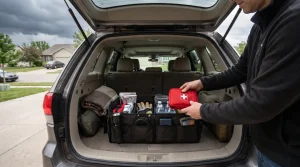
Keep an Emergency Kit in Your Vehicle
A roadside emergency kit can help you manage an unexpected delay, breakdown, or road closure. Store supplies in a secure location where they will remain accessible without interfering with vehicle controls.
Useful items include a fully charged phone and charging cable, a flashlight, a first-aid kit, drinking water, essential medications, a reflective warning device appropriate for your vehicle and local conditions, and basic emergency supplies. A portable power bank can be particularly useful if your vehicle battery fails or you need to conserve your phone’s charge.
If you regularly travel through rural areas, consider carrying additional supplies suited to the climate and the length of your journey. Keep children’s needs, mobility requirements, and essential medications in mind when preparing for family travel.
Emergency supplies are helpful, but they do not make flooded roads passable. Their purpose is to help you manage delays and seek assistance when travel becomes unsafe.
Check Weather Forecasts Before Leaving
Review the forecast before starting a long drive, especially if your route passes through areas prone to flash flooding, mountain roads, desert washes, or coastal storm impacts.
The National Highway Traffic Safety Administration’s severe-weather driving guidance recommends checking travel conditions, planning routes, and preparing for unexpected weather.
Pay attention to flood watches and warnings, severe thunderstorm alerts, evacuation notices, and road closures. A flood watch generally means conditions are favorable for flooding, while a flood warning means flooding is occurring, imminent, or otherwise requires immediate protective action according to the alert.
Use official weather alerts alongside local transportation information. If authorities advise against travel, postpone the trip whenever possible.
Plan Alternative Routes
A safe route is not necessarily the shortest route. A road that crosses a creek, passes through a low underpass, or runs alongside a drainage channel may become dangerous during intense rainfall.
Before leaving, identify alternatives that avoid known flood-prone locations. If you travel frequently, learn which roads in your area have a history of closures during storms.
Navigation applications can be useful, but they may direct drivers toward a road that has flooded moments earlier. Never follow an app into standing water or past a road-closure barrier simply because it recommends that route.
When necessary, stop in a safe location to review updated information and choose another route.
Driving Safely During Thunderstorms and Severe Weather Alerts
Heavy rain often occurs alongside thunderstorms, strong winds, hail, and lightning. Each hazard introduces additional risks, and the safest response may be to delay travel altogether.
When a Thunderstorm Is Approaching
If a severe thunderstorm warning covers your route, consider postponing departure or stopping at a safe destination before conditions deteriorate.
Strong winds can push vehicles sideways, while fallen branches and debris can block roads. Hail can damage windows and reduce visibility, and intense rainfall can create localized flooding.
Avoid parking beneath large trees or near structures that may shed debris. If you need to wait, choose a suitable building or other safe location away from flood-prone areas.
Never stop beneath a highway overpass as a routine response to a storm. Doing so can expose you to traffic conflicts and obstruct other drivers. Instead, seek an appropriate parking area or exit the highway when it is safe to do so.
If Lightning Is Nearby
A fully enclosed, hard-topped vehicle can provide protection from lightning when its windows are closed. However, the vehicle does not protect occupants from flooding, falling trees, hail damage, or traffic collisions.
Do not stop in an exposed low area where water may collect. If you must wait for a storm to pass, choose a location that offers protection from traffic and environmental hazards.
Keep the vehicle’s doors and windows closed, and avoid touching metal components connected to the exterior during a lightning event.
When Authorities Issue a Flash Flood Warning
Treat a flash flood warning seriously, particularly if you are traveling through a low-lying area. Follow instructions from emergency officials and move toward higher ground using a route that does not require crossing floodwater.
Do not assume that you have plenty of time simply because your immediate street remains dry. Water can arrive from rainfall upstream or from surrounding terrain.
If an evacuation route becomes flooded, do not attempt to force your way through it. Follow official instructions, seek a safer alternative if available, and contact emergency services if you become trapped or face an immediate threat.
Common Rainy-Weather Driving Mistakes to Avoid
Even experienced drivers can make poor decisions when they are running late, unfamiliar with a route, or confident in their vehicle’s capabilities. Recognizing common mistakes helps reduce unnecessary risks.
Driving at the Posted Speed Limit Regardless of Conditions
A posted speed limit does not mean that speed is safe under every circumstance. Heavy rain, poor visibility, standing water, and traffic congestion may require a substantially lower speed.
Drivers should adjust their speed to the conditions while maintaining awareness of surrounding traffic. Slowing down too late, particularly immediately before a puddle, may also create a hazard for vehicles following behind.
Assuming SUVs and Trucks Are Safe in Floodwater
Larger vehicles may have greater ground clearance than some passenger cars, but that does not make them immune to flooding.
Water can reduce tire traction, damage electrical systems, enter the engine, and create enough force to move a vehicle. A pickup truck or SUV can also become unstable in a strong current.
Never use vehicle size, four-wheel drive, or ground clearance as a reason to cross a flooded road.
Using Hazard Lights While Continuing to Drive
Hazard warning lights are intended to communicate a warning, but using them while moving can confuse other drivers about your intentions and may be restricted by state law in some circumstances.
During rain, prioritize working headlights, appropriate speed, and predictable driving. If you must stop because of an emergency, use hazard lights when appropriate to alert other road users, while remaining aware that they do not make an unsafe stopping location safe.
Following Other Drivers Through Dangerous Conditions
A driver ahead may cross a flooded road without an immediately visible problem. That does not mean the road is safe for your vehicle or that the water will remain at the same level.
Do not treat another driver’s decision as reliable evidence. Water depth, vehicle weight, tire condition, and the condition of the roadway can differ significantly.
Make decisions based on the actual hazards and official instructions, not on pressure from impatient motorists.
Underestimating Familiar Roads
Drivers often feel more confident on roads they use every day. Familiarity, however, cannot prevent storm drains from overflowing, culverts from becoming blocked, or pavement from washing away.
A neighborhood street that is safe in ordinary weather may become dangerous after a short period of intense rain. Review the conditions each time you travel rather than relying on memory of the route.
Special Considerations for Different U.S. Driving Environments
Weather-related driving risks vary across the United States. Understanding local hazards can help drivers prepare more effectively.
California and the Western United States
In California and other Western states, intense rain can create flash flooding in mountain areas, desert washes, burn-scar regions, and urban neighborhoods with poor drainage.
After wildfires, some slopes may be more vulnerable to debris flows during heavy rain. Drivers should monitor local emergency alerts and avoid roads affected by closures, mudslides, or rapidly moving runoff.
In desert areas, normally dry channels can fill suddenly. Never drive into a wash simply because it appears dry at the entrance or because rainfall is not occurring directly overhead.
Gulf Coast and Southeastern States
Drivers in states such as Florida, Louisiana, Mississippi, Alabama, and Texas may encounter heavy rainfall from tropical systems, hurricanes, thunderstorms, and slow-moving weather fronts.
Coastal storm impacts can coincide with overwhelmed drainage systems and road closures. Follow evacuation orders, avoid coastal roads affected by flooding, and do not assume that a familiar route will remain open during a storm.
If severe weather is forecast, consider completing essential travel before conditions deteriorate rather than waiting until flooding begins.
Midwest and Northeast
Heavy thunderstorms, intense rainfall, and seasonal storms can affect roads across the Midwest and Northeast. Low-lying intersections, underpasses, rural crossings, and roads near rivers can become hazardous.
During autumn and winter, rain may also combine with falling temperatures, creating conditions that require additional caution. If rain begins freezing or transitions into snow or sleet, reduce speed further and reconsider whether travel is necessary.
Regardless of the region, official warnings and road conditions should guide your decisions.
Frequently Asked Questions About Safe Driving in Heavy Rain
What Is the Safest Speed to Drive in Heavy Rain?
There is no universal safe speed for every rainy-weather situation. The appropriate speed depends on visibility, tire condition, traffic, road design, water accumulation, and the likelihood of hydroplaning.
Drive below the posted limit whenever conditions require it, and slow down gradually before reaching standing water. If you cannot see the road clearly enough to stop safely for hazards, leave the roadway at an appropriate exit or find a safe place to wait.
Can Hydroplaning Happen at Low Speeds?
Yes. Hydroplaning is more likely at higher speeds, but it is not limited to highway driving. Deep standing water, worn tires, and poor drainage can create traction problems even when a vehicle is moving relatively slowly.
Do not rely on a particular speed threshold to guarantee safety. The best prevention is to reduce speed, maintain good tires, and avoid water-covered sections of road.
Should I Brake If My Car Starts Hydroplaning?
Avoid sudden or aggressive braking while the vehicle is sliding. Gently ease off the accelerator, maintain a steady steering input, and allow the vehicle to regain traction.
Once the tires reconnect with the road, make gradual corrections as needed. If you encounter an immediate hazard, respond according to the situation while avoiding abrupt actions that could worsen the loss of control.
Is It Safe to Drive Through a Few Inches of Floodwater?
No flooded roadway should be treated as safe merely because the water appears shallow. Depth can be difficult to judge, the current may be stronger than it looks, and the road underneath may have been damaged.
Turn around and use another route. There is no need to risk your life or your passengers’ lives to save a few minutes.
What Should I Do if My Car Gets Caught in a Flash Flood?
If your vehicle is caught in rising water, prioritize getting to safety. If you can leave without entering dangerous moving water, move toward higher ground and contact emergency services when necessary.
If the water is moving rapidly or you cannot safely exit, call 911 and follow emergency responders’ instructions. Avoid risking your life to retrieve possessions or protect the vehicle.
Do I Need Special Tires for Rainy Weather?
Many drivers can use standard tires designed for their vehicle and climate, provided those tires are properly maintained and suitable for local conditions. The important factors include adequate tread, correct inflation, and the manufacturer’s recommendations.
Drivers who regularly encounter snow, ice, or other demanding conditions should select tires appropriate for those conditions as well. Consult a qualified tire professional if you are uncertain about the best option for your vehicle.
Are All-Wheel-Drive Vehicles Safer in Heavy Rain?
All-wheel drive can help a vehicle distribute engine power across multiple wheels, but it does not prevent hydroplaning or guarantee shorter stopping distances on wet pavement.
Braking and steering still depend on tire-road contact. Drivers of all-wheel-drive SUVs and trucks must follow the same principles of reducing speed, maintaining distance, and avoiding floodwater.
Should I Use Cruise Control on Wet Roads?
It is best to avoid cruise control during heavy rain or whenever roads are slippery. Manual speed control makes it easier to respond to changing conditions and unexpected standing water.
Remain alert, keep both hands available for steering as appropriate, and make smooth adjustments to speed.
Conclusion: Make Safety More Important Than Reaching Your Destination
Safe driving in heavy rain and flash floods depends on recognizing hazards early and making sensible decisions before a situation becomes an emergency. Reduced traction, limited visibility, standing water, and rapidly rising floodwater can affect drivers of every experience level.
Preventive steps matter. Keep your tires in good condition, check your lights and windshield wipers, slow down when pavement becomes wet, and leave enough distance to respond to traffic ahead. Monitor weather alerts before leaving, plan alternative routes, and carry basic emergency supplies.
Most importantly, never attempt to drive through flooded roads. Water can hide damaged pavement, overwhelm a vehicle’s traction, and sweep even large vehicles away. If a road is flooded or blocked, turn around and choose a safer route.
No appointment, commute, shopping trip, or shortcut is worth risking your life. When weather conditions become dangerous, delaying travel is a responsible driving decision, not an inconvenience to overcome.
By preparing ahead of time and respecting the limits of your vehicle, you can reduce risks, protect your passengers, and help keep American roads safer during storms.