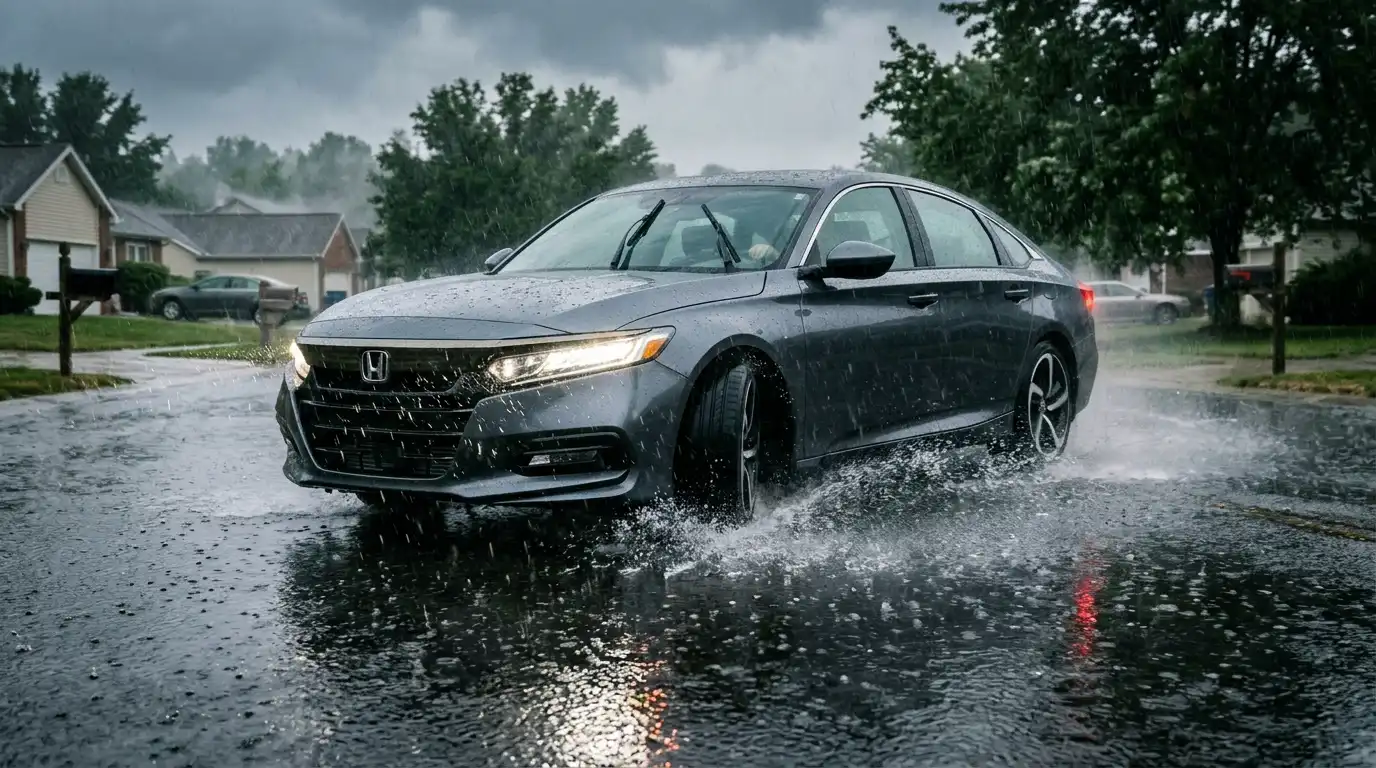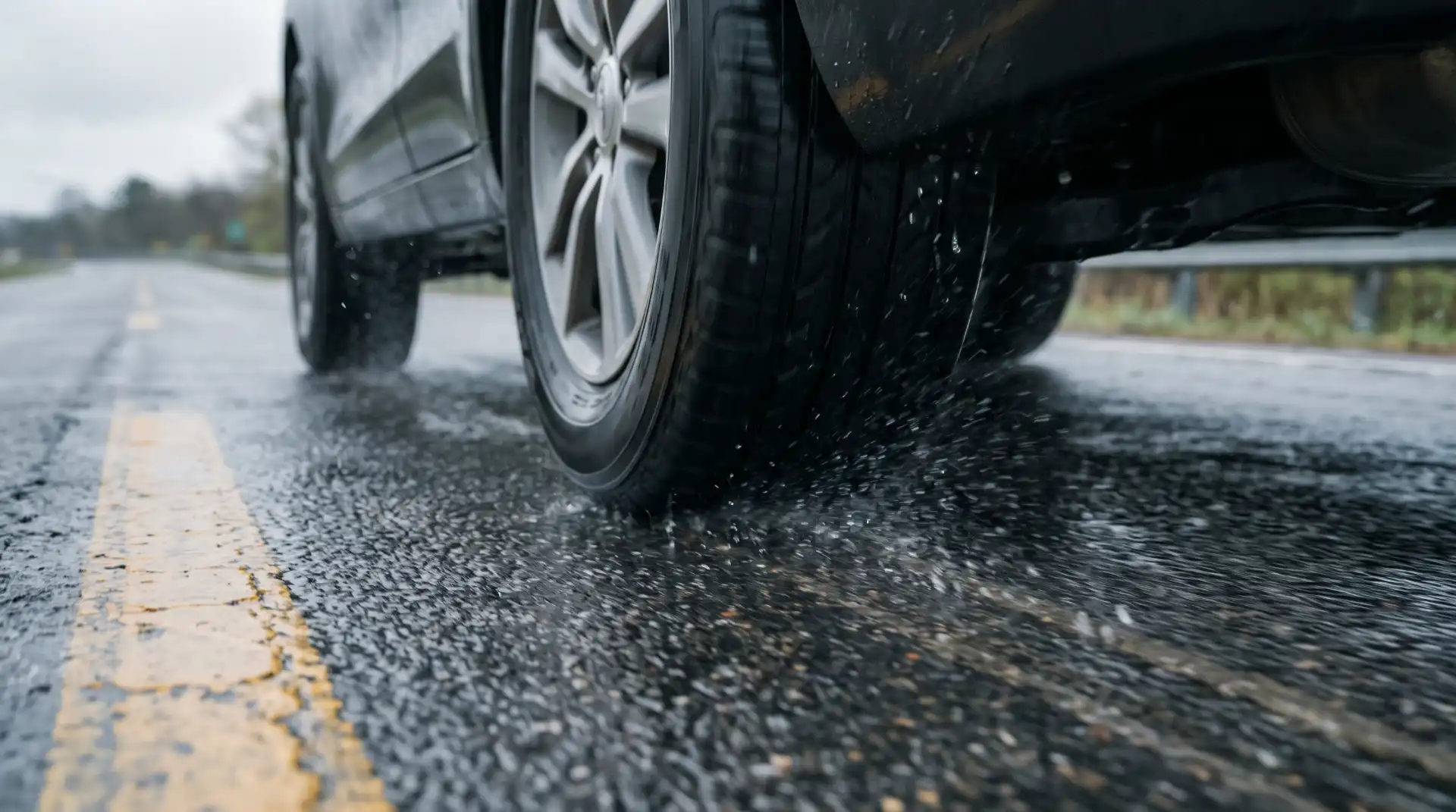
Your tires are the only point of contact between your vehicle and the road. Discover how adequate tread depth channels water away, prevents hydroplaning, and keeps you safe during heavy rainfall.
Driving in heavy rain can quickly transform a routine commute into a high-stress experience. When water accumulates on the roadway faster than your vehicle’s tires can displace it, your risk of losing control increases dramatically. This dangerous phenomenon—known as hydroplaning—occurs when a layer of water builds up between your tires and the asphalt, causing the vehicle to slide and respond to neither steering nor braking inputs.
While many factors contribute to wet-weather crashes, the single most critical variable within your control is your vehicle’s tire condition. Understanding **tire tread depth safety hydroplaning** dynamics empowers you to spot dangerous tire wear early, maintain optimal stopping distances, and navigate rain-slicked highways with total confidence.
The Physics of Hydroplaning: Why Tread Depth Matters
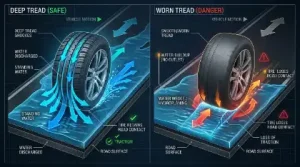
To understand why worn tires are so hazardous, it helps to examine how healthy tire tread functions in wet weather. Tire treads are not designed simply for traction on dry roads; they are engineered hydraulic pumps. The deep circumferential grooves, lateral channels, and micro-grooves (called sipes) act together to channel water out from beneath the tire’s footprint.
At 60 mph, a healthy tire can evacuate several gallons of water per second from the road surface. However, as rubber wears down over time, the depth of these channels shrinks. With less channel volume available to displace water, liquid builds up in front of the rolling tire. Once water pressure exceeds the weight of the vehicle, the tire rises onto a thin cushion of liquid, completely losing contact with the road surface.
Federal driving safety resources maintained by the National Highway Traffic Safety Administration (NHTSA) highlight that worn tires significantly increase stopping distances on wet pavement and are a leading factor in wet-weather loss-of-control crashes.
Tread Depth Thresholds: 2/32″, 4/32″, and Real-World Safety
Tire tread depth is measured in thirty-seconds of an inch (32nds). New passenger car tires typically come with 10/32″ to 11/32″ of tread depth. Understanding the critical safety thresholds helps you decide when it is time to replace your tires:
- 10/32″ to 6/32″ (Optimal Safety): Maximum water displacement capability, optimal grip in heavy rain and snow, and shortest stopping distances.
- 5/32″ to 4/32″ (Cautionary Zone): Noticeable reduction in wet-weather traction. Hydroplaning resistance begins to drop significantly at highway speeds.
- 3/32″ to 2/32″ (Critical Danger Zone): Water displacement drops dramatically. Stopping distances on wet roads double compared to new tires.
- 2/32″ and below (Legally Bald): The legal minimum tread depth in most states. Tires at this level must be replaced immediately as they offer virtually zero hydroplaning protection.
How to Check Your Tread Depth: The Penny Test & Beyond
Monitoring your tires does not require expensive tools or trips to the mechanic. You can perform quick, accurate inspections at home using simple methods:
1. The Classic Penny Test
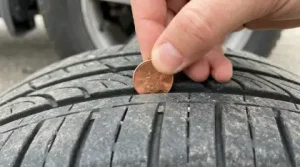
Place a standard Lincoln penny upside down into several tread grooves across the width of the tire, with Lincoln’s head facing you. If the top of Lincoln’s head is covered by the tread, you have more than 2/32″ of tread depth remaining. If his entire head is visible, your tires are legally bald and unsafe for road use.
2. The Quarter Test (The Safer Rain Standard)
While 2/32″ is the legal limit, safety experts recommend replacing tires before they reach that point. Place a quarter upside down into the tread. If the top of Washington’s head is covered, you have at least 4/32″ of tread depth remaining—the minimum threshold for reliable hydroplaning resistance in rain.
3. Built-In Tread Wear Indicators (Wear Bars)
Modern tires feature raised narrow rubber bars molded horizontally across the bottom of the tread grooves. When the surrounding tread wears down flush with these wear bars, the tire has reached the 2/32″ limit and requires immediate replacement.
For more detailed technical guides on vehicle maintenance and safety checks, explore resources hosted by the Ready.gov Severe Weather Driving Guide.
Comparison: Wet Braking Distance by Tread Depth
| Tread Depth | Wet Stopping Distance (from 60 mph) | Hydroplaning Risk Level | Recommended Action |
|---|---|---|---|
| 10/32″ (New) | ~195 feet | Very Low | Routine inspection every 5,000 miles |
| 4/32″ (Warning) | ~290 feet (+48% increase) | Moderate | Plan for tire replacement soon |
| 2/32″ (Bald) | ~380 feet (+95% increase) | Extremely High | Replace tires immediately |
Proactive Tips to Avoid Hydroplaning in Wet Weather
In addition to maintaining adequate tire tread depth, adopting smart wet-weather driving habits further minimizes your risk of hydroplaning:
- Slow Down During Rainstorms: Hydroplaning risk increases rapidly with speed. Reducing your speed by 10 to 15 mph gives your tires more time to displace standing water.
- Maintain Proper Tire Pressure: Underinflated tires sag in the center, allowing water to pocket underneath the tread and increasing hydroplaning susceptibility. Check tire pressure monthly.
- Avoid Driving in Outer Lanes & Puddles: Water collects in roadside ruts and low spots. Drive in the tracks left by preceding vehicles where water has already been temporarily cleared.
- Turn Off Cruise Control: Never use cruise control on wet roads. If your vehicle starts to hydroplane, automated throttle systems can cause sudden wheel spin and loss of control.
What to Do If Your Vehicle Hydroplanes
If you feel your steering wheel go light or experience sudden vehicle slipping in heavy rain, remain calm and execute these immediate actions:
Ease off the accelerator gradually. Do not slam on the brakes, as sudden lockup will exacerbate the slide. Hold the steering wheel straight and steady until the tires regain traction with the asphalt, then gently apply brakes if necessary.
Final Thoughts
Checking your tire tread depth takes less than two minutes, but it can prevent catastrophic accidents during heavy rainstorms. By conducting regular penny tests, replacing worn rubber at 4/32″, keeping tires properly inflated, and reducing speed on wet highways, you ensure maximum stopping power and keep your journeys safe in all weather conditions.